What Is a Healthy Weight? What BMI Can and Cannot Tell You

"Healthy weight" sounds like a personal target, but in public health it means something narrower: a range of weight, relative to height, in which the risks of conditions such as type 2 diabetes, heart disease and some cancers are lowest for adults as a group. This guide explains how that range is defined, why body mass index (BMI) is the usual yardstick, and what it leaves out.
How health services define a healthy weight
The World Health Organization (WHO) describes obesity as a chronic disease, and it diagnoses overweight and obesity with BMI: weight in kilograms divided by height in metres squared. For adults, the WHO sets overweight at a BMI of 25 or more and obesity at 30 or more. The CDC in the United States and the NHS in the UK use the same thresholds, and describe a BMI from 18.5 to just under 25 as a healthy weight. Below 18.5 is classed as underweight, which carries its own risks.
Put into weights, that range is wide. A woman or man who is 5 ft 6 in tall is in it anywhere from about 115 to 154 pounds. You can look up your own height in our table of healthy weight ranges by height.
Why BMI is used
BMI has lasted because it is practical. It needs only a tape measure and a set of scales, it is the same for women and men, and it allows comparisons across countries and over time. Studies of large populations show that, on average, risks of several long-term conditions rise as BMI rises above the healthy range. That is why the WHO uses it to track obesity worldwide and why doctors use it as a first check.
The WHO's latest figures show how common higher weights have become: in 2024, 2.6 billion adults (45% of adults aged 18 and over) were living with overweight, including 940 million living with obesity, about 16% of adults. Worldwide adult obesity has more than doubled since 1990.
What BMI cannot tell you
The CDC calls BMI a screening measure and "one potential health indicator" to be considered with other factors. Its main limits are well known:
- It does not separate muscle from fat. A rugby player and a sedentary office worker can share a BMI of 28 and have very different amounts of body fat. The NHS points out that a lot of muscle can put someone in the overweight or obese category despite low body fat.
- It does not show where fat is stored. Fat carried around the abdomen is more closely linked to type 2 diabetes, high blood pressure and heart disease than fat elsewhere. Two people with the same BMI can have very different waist sizes.
- It works differently across ethnic groups. NICE notes that people with a South Asian, Chinese, other Asian, Middle Eastern, Black African or African-Caribbean background are prone to central fat and that their cardiometabolic risk occurs at a lower BMI. It recommends lower thresholds for them, explained in adult BMI categories.
- Age changes the picture. NICE advises caution in people aged 65 and over and mentions the possible protective effect of a slightly higher BMI in later life.
- It does not apply to children. Children's BMI is interpreted with age- and sex-specific percentiles.
Measures that add information
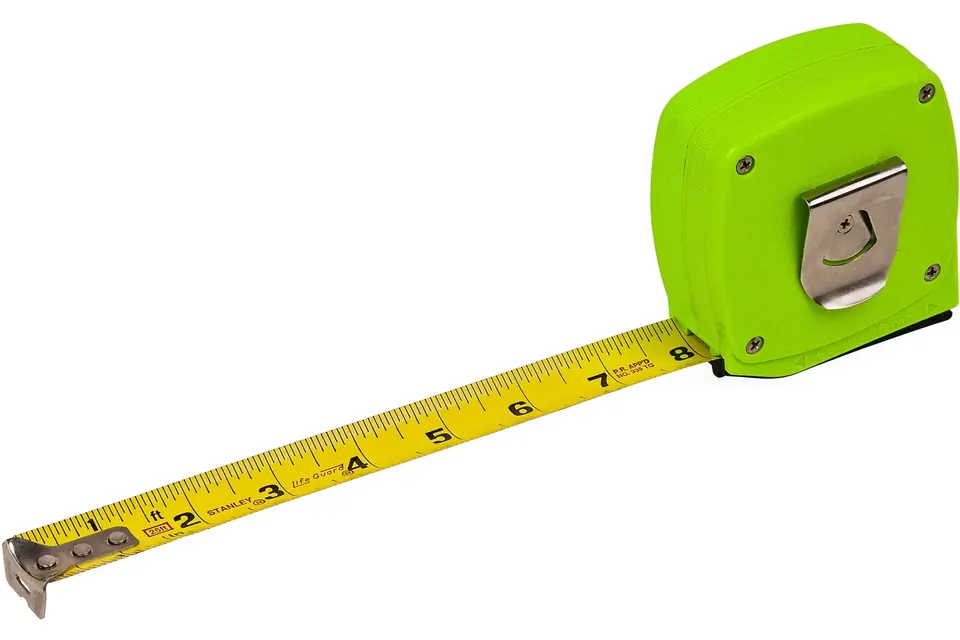
The simplest addition is a waist measurement. NICE recommends that adults with a BMI under 35 use their waist-to-height ratio, alongside BMI, as a practical estimate of central fat, and that they try to keep their waist to less than half their height. It is easy to do at home with a tape measure; our guide to the waist-to-height ratio shows how.
Beyond that, a health professional will look at things no tape measure can show: blood pressure, blood sugar and cholesterol, family history, medicines, mobility, mood, and how weight has changed over time. NICE specifically advises health professionals not to attribute every symptom to weight and to deal with the problem the person came in with first.
What affects weight besides food and exercise
The US National Institute of Diabetes and Digestive and Kidney Diseases (NIDDK) lists many factors that can affect weight:
- eating and drinking habits, and how much time is spent sitting;
- where people live, work, play and worship, for example whether there is a shop selling affordable fruit and vegetables nearby or safe places to walk;
- sleep: it states that not getting enough sleep is linked to weight gain and may make people feel hungrier;
- medicines, including some used for epilepsy, depression, high blood pressure and diabetes, and corticosteroids;
- health problems such as hypothyroidism, polycystic ovary syndrome or Cushing's syndrome, as well as depression and long-term stress;
- family history and genes.
This list matters for two reasons. It explains why two people who eat and move in similar ways can weigh quite differently. And it shows why advice that focuses only on willpower misses much of the picture; the WHO describes obesity as driven by complex interactions between environmental, social, biological and behavioural factors.
A healthier way to think about weight
Public health guidance on healthy weight rarely talks about a perfect number. It talks about habits that are good for health at any weight: a varied diet with plenty of vegetables, fruit, whole grains and pulses; regular physical activity and less sitting; enough sleep; and limiting alcohol. These habits bring benefits whether or not the scales move.
If you are concerned about your weight, whether it is high, low or changing without a reason you know of, the best next step is to speak to a doctor, nurse or dietitian. The same applies if thoughts about food or weight are taking up a lot of your day. Eating disorders can affect people of any weight, and the NHS advises anyone who has, or thinks they may have, one to see a GP rather than rely on a BMI calculator.
Sources
- World Health Organization, "Obesity and overweight" fact sheet: definitions, 2024 prevalence figures, causes.
- National Institute of Diabetes and Digestive and Kidney Diseases (NIH), "Factors Affecting Weight & Health".
- NICE guideline NG246, "Overweight and obesity management", recommendations 1.9.1 to 1.9.15 (nice.org.uk).
- Centers for Disease Control and Prevention, "Adult BMI Categories" (cdc.gov/bmi).
- NHS, "Calculate your body mass index (BMI) for adults" (nhs.uk).
 Healthy weight & BMI
Healthy weight ranges by height
A table of healthy weight ranges for adults from 4 ft 10 in to 6 ft 6 in and 150 to 195 cm, with how the range is worked out and when it does not apply.
 Healthy weight & BMI
Adult BMI categories explained
Underweight, healthy weight, overweight and the three obesity classes, the lower NICE thresholds for some ethnic groups, and how to read your number.
 Healthy weight & BMI
Waist-to-height ratio
Keep your waist to less than half your height: how to measure, how to calculate the ratio and what the NICE bands mean.