Free Sugars and Salt: What the Daily Limits Mean on Your Plate

Most nutrition advice is about eating more of something. Sugar and salt are the exceptions: almost everywhere, people eat more of both than health bodies recommend, and much of it is already in food before it reaches the table. This guide explains what the limits are, what counts towards them and how to spot the main sources.
Free sugars: what counts
The WHO defines free sugars as sugars added to foods and drinks by the manufacturer, the cook or the consumer, plus sugars naturally present in honey, syrups, fruit juices and fruit juice concentrates. Sugars inside the structure of whole fruit and vegetables, and those naturally present in milk, are not free sugars. That distinction explains why a whole orange and a glass of orange juice are treated differently: juicing releases the sugars, which is why the NHS limits juice and smoothies to 150 ml a day. Our 5 A Day guide covers the details.
How much is too much
The WHO's guidance is to limit free sugars to less than 10% of total energy intake throughout life, which it says is about 50 g, or around 12 level teaspoons, for a person of healthy weight eating about 2,000 calories a day. It adds that reducing to 5% or less may provide additional health benefits. It also advises against using non-sugar sweeteners as the way to cut free sugars.
The NHS translates this into grams for each age group:
| Age | Free sugars |
|---|---|
| Adults and children 11 and over | 30 g (about 7 sugar cubes) |
| 7 to 10 years | 24 g (6 sugar cubes) |
| 4 to 6 years | 19 g (5 sugar cubes) |
The NHS adds that eating too much sugar can contribute to taking in more calories than needed, and that sugar is one of the main causes of tooth decay. Its own example: a can of cola can contain as much as 9 cubes of sugar, more than the recommended daily limit for adults, so drinks are often the easiest place to start. The NHS also gives lower limits for younger children: 14 g at ages 2 to 3 and 10 g at age 1.
In the United States, the Dietary Guidelines for Americans issued in January 2026 also put a strong emphasis on cutting added sugars; check the current wording on dietaryguidelines.gov if you follow US advice.
Salt and blood pressure
Salt is sodium chloride, and sodium is an essential nutrient in small amounts. The problem is quantity. The WHO says almost all populations consume too much: the global average for adults was 4,278 mg of sodium a day in 2021, equivalent to about 11 g of salt, more than double its recommendation of less than 2,000 mg of sodium, or less than 5 g of salt (about one teaspoon). The main health effect is raised blood pressure, which increases the risk of heart disease and stroke.
The NHS sets a maximum of 6 g of salt a day for adults and children aged 11 and over, around one level teaspoon, with lower limits for younger children: 5 g at 7 to 10 years, 3 g at 4 to 6 years, 2 g at 1 to 3 years, and less than 1 g for babies, whose kidneys cannot yet cope with more. The two figures differ slightly because they come from different expert reviews; both are maximums, not targets.
Where the sugar and salt come from
The NHS estimates that around three quarters of the salt we eat comes from packaged and everyday foods: bread, breakfast cereals, meat products and ready meals, as well as takeaways and restaurant food. The same pattern holds for sugar, which is found in obvious places such as sweets, cakes, biscuits and sugary drinks, but also in flavoured yoghurts, breakfast cereals, sauces and some savoury products.
That is why the salt shaker is only part of the story. Cooking more meals from basic ingredients gives you control over how much goes in.
Reading labels
- Traffic lights. In the UK, many packs show colour-coded front labels for fat, saturated fat, sugars and salt. More greens and ambers, fewer reds, is a quick rule of thumb.
- Per 100 g. Comparing per 100 g lets you compare products of different sizes.
- Sodium and salt. Some labels show sodium rather than salt. Salt is roughly 2.5 times the sodium figure (1 g of sodium is about 2.5 g of salt).
- Sugars on labels. The "sugars" line on a nutrition label usually includes both free sugars and those naturally present in milk and fruit, so the ingredients list helps: sugar, syrups, honey and fruit juice concentrates are all free sugars.
Cutting down without fuss
- Swap sugary drinks for water, lower-fat milk or sugar-free drinks; dilute squash well.
- Taste before adding salt, and use herbs, spices, pepper, garlic, chilli or lemon for flavour.
- Choose tinned vegetables, pulses and fish in water rather than brine, and fruit in juice rather than syrup.
- Go easy on salty sauces such as soy sauce, ketchup and gravy granules, and on cured meats, cheese and pickles.
- Reduce gradually, one product or habit at a time, so the change is easy to keep.
- Check medicines: some dissolvable tablets are high in salt. The NHS advises speaking to a GP before changing any medicines.
None of this means foods with sugar or salt are forbidden. The Eatwell Guide, described in a balanced plate, places them outside the main food groups to be eaten less often and in smaller amounts.
Sources
- World Health Organization, "Sodium reduction" fact sheet: global intake, under 5 g of salt a day, health effects.
- NHS, "Sugar: the facts": free sugars and limits by age.
- NHS, "Salt in your diet": 6 g limit, limits by age, sources, tips.
- World Health Organization, "Guideline: sugars intake for adults and children" (2015) and "Healthy diet" fact sheet (who.int).
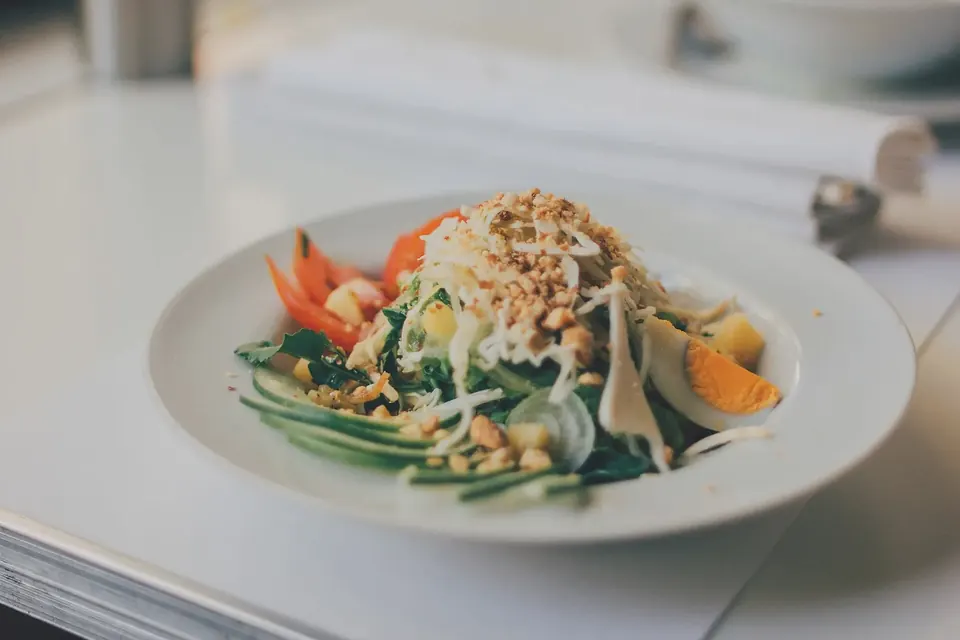 Nutrition basics
A balanced plate
The five food groups of the Eatwell Guide, the WHO's four principles of a healthy diet, and how to turn them into ordinary meals.
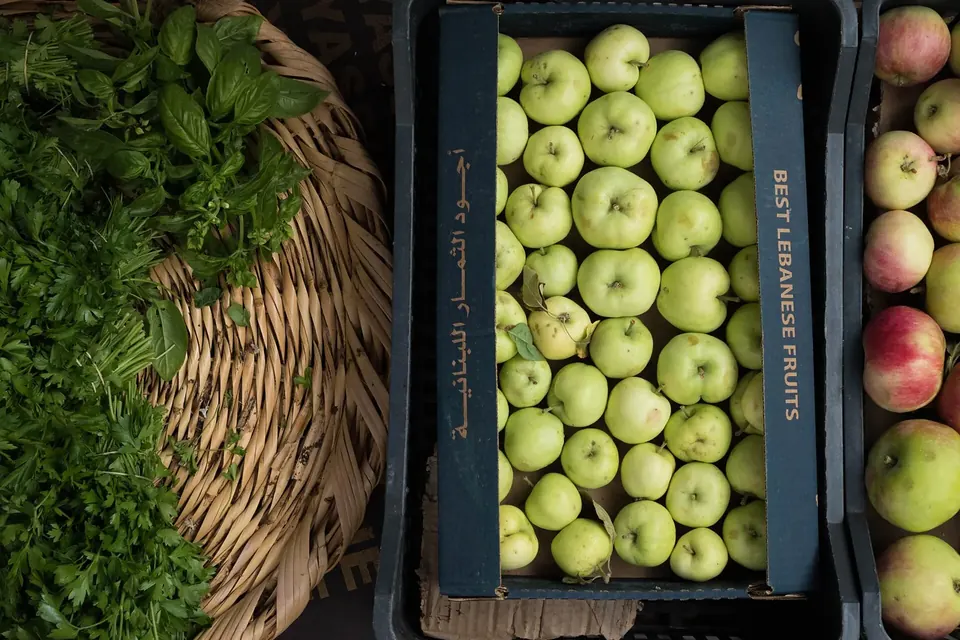 Nutrition basics
Fruit and vegetables: 5 A Day
What counts as a portion, why potatoes do not, the limits on juice and pulses, and how 5 A Day relates to the WHO's 400 g a day.
 Nutrition basics
Fibre and whole grains
Most adults eat about 20 g of fibre a day against a recommended 30 g. Why it matters, where it comes from and how to add more gradually.