Waist-to-Height Ratio: How to Measure It and What the 0.5 Threshold Means
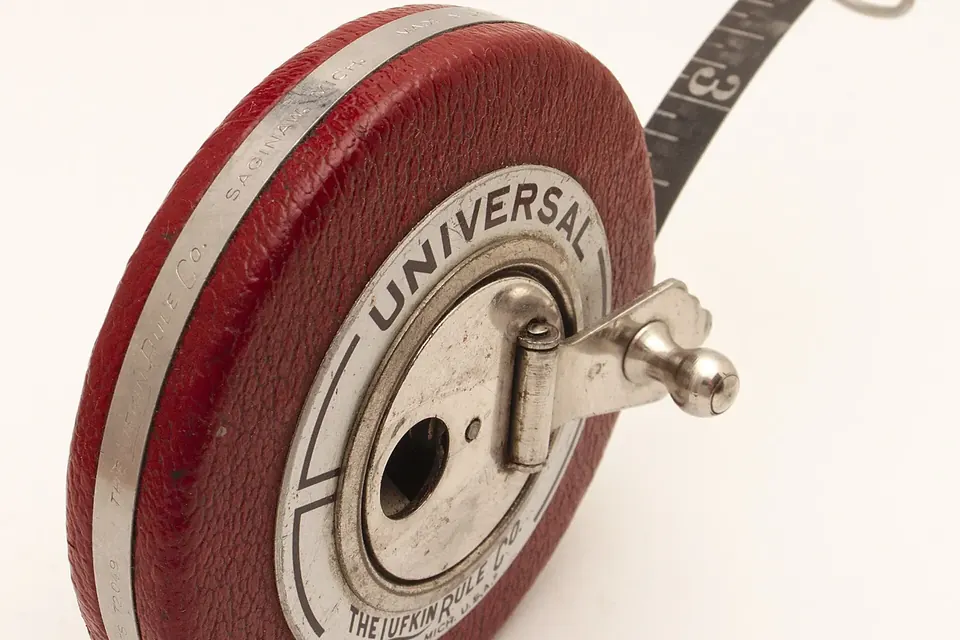
Body mass index says nothing about where fat is stored, yet fat carried around the abdomen is more closely linked to type 2 diabetes, high blood pressure and heart disease. The waist-to-height ratio is a simple way to capture that. NICE, which produces clinical guidance in England, now recommends it alongside BMI for most adults, with a memorable rule: keep your waist to less than half your height.
Why waist size matters
Fat stored deep in the abdomen, around the organs, behaves differently from fat stored under the skin of the hips and thighs, and it is more strongly associated with cardiometabolic problems. Two people with the same BMI can carry very different amounts of it. That is why NICE describes BMI as a practical measure of overweight and obesity that must be interpreted with caution "because it is not a direct measure of central adiposity", and recommends adding the waist-to-height ratio for adults with a BMI below 35.
Dividing the waist by height makes the measure fairer to tall and short people: a 90 cm waist means something different on someone who is 155 cm tall than on someone who is 190 cm tall.
How to measure your waist
NICE's guideline includes a short method for people to measure themselves, and the NHS has a video on its obesity page showing the same steps:
- Find the bottom of your ribs and the top of your hips.
- Wrap a tape measure around your waist midway between these points. For most people this is just above the belly button.
- Breathe out naturally before you read the measurement. Do not pull the tape tight or hold your stomach in.
A few practical tips help: measure on bare skin or over thin clothing, stand up straight with your feet together, keep the tape level all the way round (a mirror helps), and take two readings to check they agree.
Common mistakes are measuring at the narrowest point of the torso or at the trouser waistband, which can sit well below the true midpoint, and holding the breath in. A cloth or plastic sewing tape is fine; a metal builder's tape is hard to keep level. If your two readings differ by more than a centimetre or so, take a third and use the middle value. Measure your height without shoes, standing against a wall, with a flat object such as a book resting on your head to mark the wall.
How to calculate the ratio
Use the same units for both measurements: centimetres and centimetres, or inches and inches. If you know your height in feet and inches, convert it to inches first (5 feet 7 inches is 67 inches). Then divide your waist by your height.
NICE gives two worked examples: a waist of 38 inches and a height of 67 inches gives 38 ÷ 67 = 0.57; a waist of 96.5 cm and a height of 170 cm gives the same ratio, 0.57. Our calculator does the division for you if you add a waist measurement.
What the result means
| Ratio | Description |
|---|---|
| 0.4 to 0.49 | Healthy central adiposity: no increased health risks |
| 0.5 to 0.59 | Increased central adiposity: increased health risks |
| 0.6 or more | High central adiposity: further increased health risks |
The health risks NICE has in mind include type 2 diabetes, hypertension and cardiovascular disease. In conversation, it suggests health professionals put it simply: try to keep your waist to less than half your height. For someone who is 5 ft 6 in (66 inches), that means a waist under 33 inches; at 170 cm, under 85 cm.
NICE does not describe a band below 0.4. A very low ratio may simply reflect a slim build, but if it comes with a low BMI, unplanned weight loss or worries about eating, it is worth talking to a health professional.
Who the ratio is for
According to NICE, the bands can be used for adults with a BMI under 35 kg/m², of both sexes and all ethnicities, including adults with high muscle mass. That last point makes it a useful companion for people whose BMI is pushed up by muscle, a known weakness of BMI. It also helps people from ethnic groups who tend to store fat centrally at lower BMIs, since the same 0.5 boundary applies to everyone.
Above a BMI of 35, NICE does not ask for a waist measurement, because health risks are already considered high on BMI alone. For children and young people aged 5 and over, NICE suggests clinicians consider measuring waist-to-height ratio too, and the NHS has a separate calculator for that age group; the adult bands above should not be applied to children. Our guide to BMI for children and teens explains how growth is assessed instead.
The ratio is also less meaningful during pregnancy, for obvious reasons.
Putting BMI and waist together
NICE's approach is to look at both. A BMI in the healthy range with a ratio of 0.5 or more suggests extra fat around the middle that BMI alone would miss. A BMI in the overweight range with a ratio below 0.5, common in people with a lot of muscle, suggests a lower risk than the BMI label implies. Neither number is a diagnosis. If your ratio is 0.5 or above, NICE encourages you to seek advice and further checks, such as blood pressure and blood tests, from a health professional.
The habits that help keep a waist in check are the same ones that support health generally: regular physical activity, including strength exercises, a diet built around vegetables, fruit, whole grains and pulses, enough sleep and less alcohol. For the overall categories, see adult BMI categories explained.
Sources
- NICE guideline NG246, "Overweight and obesity management": box 1 (how to measure), recommendations 1.9.5 to 1.9.8 and 1.9.14 to 1.9.15, 1.10.5 (nice.org.uk).
- NHS, "Overweight and obesity in adults": waist-to-height ratio and how to measure your waist (video).
 Healthy weight & BMI
Adult BMI categories explained
Underweight, healthy weight, overweight and the three obesity classes, the lower NICE thresholds for some ethnic groups, and how to read your number.
 Healthy weight & BMI
What is a healthy weight?
Why health services use BMI to describe a healthy weight, what it misses, which other measures help and what affects weight beyond food and exercise.
 Healthy weight & BMI
Healthy weight ranges by height
A table of healthy weight ranges for adults from 4 ft 10 in to 6 ft 6 in and 150 to 195 cm, with how the range is worked out and when it does not apply.