Walking for Health: Brisk Pace, Short Bouts and Building a Habit

Walking needs no equipment, no membership and no special skill, which is why public health bodies keep returning to it. The NHS calls it simple, free and one of the easiest ways to get more active. Done briskly, it counts towards the 150 minutes of moderate activity that adults are advised to get each week. This guide explains what "brisk" means, how short walks add up and how to make walking a habit.
Why walking works
Brisk walking is the first example of moderate-intensity activity in the CDC's adult guidelines and in the NHS list. The WHO counts physical activity for transport, such as walking to get to and from places, alongside sport and leisure, and lists walking among the most popular ways to be active. The NHS says brisk walking can help build stamina, burn calories and make the heart healthier.
Walking is also low-impact and easy to adjust. You can go slower or faster, shorter or longer, on the flat or uphill, and stop whenever you need to. For many people who have been inactive, it is the natural first step towards the physical activity guidelines.
What counts as brisk
The NHS defines a brisk walk as about 3 miles an hour, faster than a stroll. The simplest check is the talk test: you are walking briskly if you can still talk but cannot sing the words to a song. Your breathing and heart rate rise and you feel warmer. Pace is relative to fitness: if you have been inactive, a brisk walk may come at a slower speed at first, and that is fine.
To make a walk more demanding, the usual options are walking faster, choosing a route with hills or stairs, or walking further. Swinging the arms and taking slightly quicker steps tends to raise the pace naturally.
Short walks add up
You do not need long sessions. The NHS states that a brisk 10-minute daily walk has health benefits and counts towards the 150 minutes. Two or three 10-minute brisk walks a day, five days a week, meet the guideline on their own. The CDC's message that some physical activity is better than none applies too: if 10 minutes is too much at first, start with five.
The NHS also promotes a free app, Active 10, which tells you when you are walking briskly and suggests ways to fit in more brisk walking.
Steps or minutes?
Many phones and watches count steps, and 10,000 a day is a familiar goal. It can be a useful prompt, but it is not the official measure: the WHO, CDC and NHS guidelines are written in minutes of moderate or vigorous activity, plus strength activities. A step count also says nothing about pace; a slow amble around the house and a brisk walk to the station count the same. If you use a step counter, it is more useful to compare your own counts from week to week, and to make some of those steps brisk, than to chase a single number.
Building walking into the day
The NHS suggests making walking a habit by including it in your routine, for example:
- walking part of your journey to work, or getting off the bus a stop early;
- walking to the shops;
- using the stairs instead of the lift;
- leaving the car behind for short journeys;
- walking children to school;
- a regular walk with a friend, or a stroll with family after dinner.
How easy this is depends a great deal on where you live: whether there are pavements, safe crossings, parks and shops within reach. If you are planning a move, it is worth weighing that up; we cover it in choosing a walkable neighbourhood after a move.
Staying motivated
- Mix it up. The NHS points out that towns and cities offer interesting walks too: parks, heritage trails, canal towpaths, riverside paths, commons and nature reserves.
- Walk with others. Walking groups are a good way to start, make friends and keep going. In the UK, organisations such as Ramblers run group walks for people of all ages and fitness levels.
- Add music or a podcast. The NHS notes it can take your mind off the effort and help you find a rhythm.
- Set a small, specific plan. "A 15-minute walk after lunch on weekdays" is easier to keep than "walk more".
Walking through the seasons
Habits often slip when the weather turns or the evenings get dark. Planning for that helps: a waterproof jacket and shoes with good grip for wet or icy pavements, a lunchtime walk in winter instead of an evening one, and an indoor fallback such as walking in a shopping centre, using the stairs at work or a short home routine. In hot weather, walk in the cooler parts of the day, choose shaded routes and carry water. The aim is not a perfect record but a pattern that survives a bad week; if you miss a few days, pick up again with a shorter walk rather than waiting for the right moment.
Comfort and safety
Any comfortable, supportive shoes that do not cause blisters will do for most walks, according to the NHS. For longer walks, water, a snack, an extra layer and sun protection help. In the dark, choose well-lit routes and wear something visible. If you have joint problems or have not been active for a long time, increase distance gradually; the NHS mentions exercise classes in swimming pools as an option where water supports the joints. Speak to a GP first if you have health conditions or concerns.
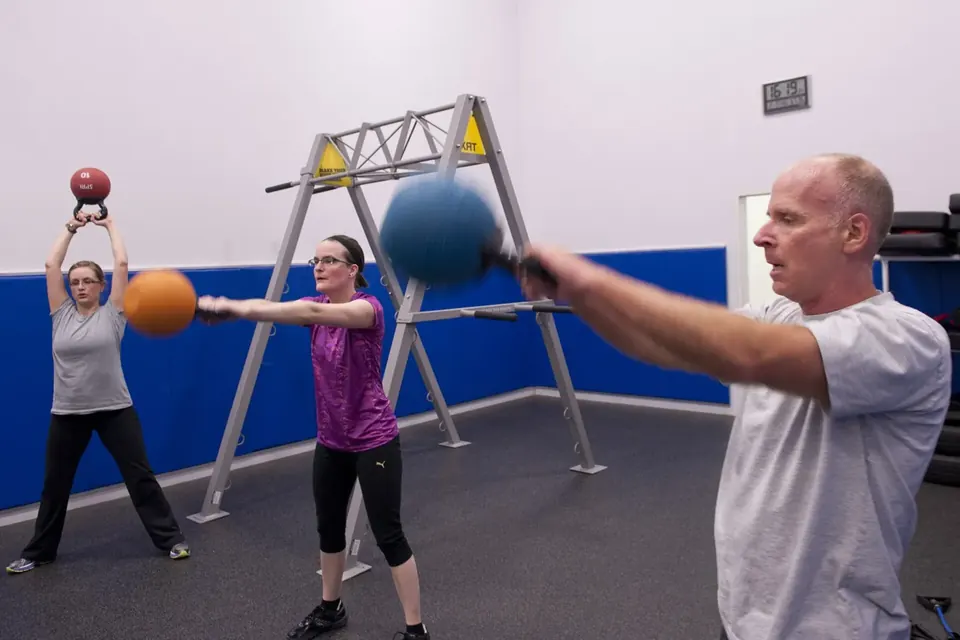
Walking pairs well with the other half of the guidelines: two days of muscle-strengthening activity a week.
Sources
- NHS, "Walking for health".
- Centers for Disease Control and Prevention, "Adult Activity: An Overview".
- World Health Organization, "Physical activity" fact sheet.
 Physical activity
 guidelines for adults
150 minutes of moderate activity a week, strength exercises on two days and less sitting: what counts, how to judge intensity and how to start.
 Physical activity
Strength activity for beginners
Strength exercises on two days a week, as the guidelines recommend: what counts, simple moves to start at home, and how to progress safely.
 Physical activity
Moving to a new city and staying active
Walkable streets, parks within reach, a commute on foot or by bike, a gym or pool nearby and a quiet bedroom: what to check before choosing where to live.