Muscle-Strengthening Activity for Beginners: What Counts and How Often
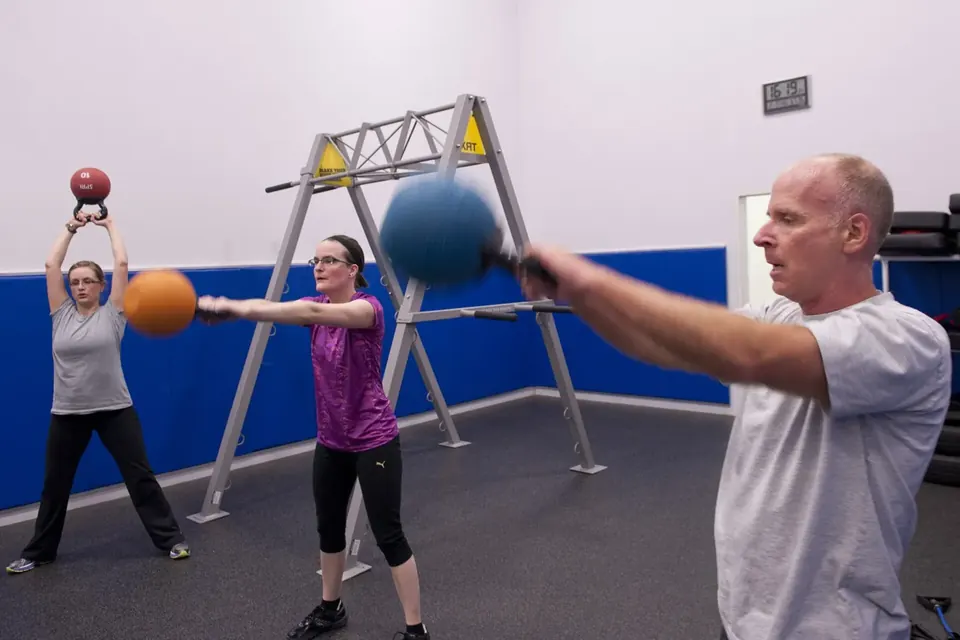
Most people know they should move more, but fewer realise that the guidelines include a second, separate recommendation: muscle-strengthening activity on at least two days a week. It does not require a gym membership or heavy weights. This guide explains why strength matters, what counts and how to make a safe start.
Why strength is a separate recommendation
Aerobic activity, such as brisk walking or cycling, mainly works the heart and lungs. Muscle-strengthening activity loads the muscles against resistance, which helps maintain muscle and bone and makes everyday tasks such as climbing stairs, carrying bags or getting up from a chair easier. That is why the WHO, the CDC and the NHS list it as a separate recommendation for adults: the CDC calls for activities on at least two days a week that work all major muscle groups, and the NHS specifies the legs, hips, back, abdomen, chest, shoulders and arms.
The NHS notes that muscle-strengthening exercises are not always aerobic, so they need to be done as well as the 150 minutes of aerobic activity, not instead of it. They can be on the same days or different days, whichever suits you. The full weekly picture is in physical activity guidelines for adults.
The WHO's summary is short: muscle strengthening benefits everyone. For older adults, it recommends combining strength with balance activities to help prevent falls.
What counts
The NHS gives a long list of muscle-strengthening activities, many of which people already do:
- carrying heavy shopping bags;
- yoga, pilates and tai chi;
- lifting weights or working with resistance bands;
- exercises that use your own body weight, such as push-ups and sit-ups;
- heavy gardening, such as digging and shovelling;
- wheeling a wheelchair;
- lifting and carrying children.
The key, according to the NHS, is to do them to the point where you need a short rest before repeating the activity. A gentle stroll with a light bag does not count; a session of digging that leaves your legs and arms tired does.
Simple exercises to start at home
The NHS publishes a gentle strength routine that can be done at home with a sturdy chair without wheels or arms. It suggests doing these exercises at least twice a week and gradually increasing the repetitions:
- Sit-to-stand: sit on the edge of the chair, feet hip-width apart, lean slightly forward and stand up using your legs rather than your arms, then sit down slowly. Aim for 5 repetitions; slower is better.
- Mini-squats: holding the back of the chair, bend your knees as far as is comfortable, keeping your back straight, then come up. Repeat 5 times.
- Calf raises: holding the chair, lift both heels slowly and lower them. Repeat 5 times.
- Sideways leg lift: holding the chair, raise one leg to the side, keeping your back and hips straight, then the other. 5 times each.
- Wall press-up: stand at arm's length from a wall, hands flat at chest height, bend your arms to bring your chest towards the wall, then push back. Up to 3 sets of 5 to 10.
- Biceps curls: holding light weights (filled water bottles will do), bend your arms to bring the weights towards your shoulders and lower slowly. 3 sets of 5 with each arm.
These are designed for people who have not done much for a while. As they get easier, more repetitions, a slower tempo, heavier household objects, resistance bands or floor exercises such as standard push-ups and lunges can follow.
How to progress
- Form before load. Move slowly and with control through a comfortable range. If a movement hurts (as opposed to feeling effortful), stop.
- Build gradually. Add repetitions first, then sets, then resistance. Small, regular increases are safer and easier to stick with.
- Cover the whole body. Over a week, include something for the legs and hips, the back and abdomen, and the chest, shoulders and arms.
- Rest between sessions. Muscles adapt between workouts, which is one reason the guidelines talk about days rather than a daily target.
- Get guidance if you can. A qualified instructor, a community class or a physiotherapist can check technique, especially before using heavier weights.
Strength and body weight
Strength training is sometimes marketed with promises about body shape or rapid weight change. The public health case for it is different and more solid: stronger muscles and bones, better balance and function, and easier everyday movement, at any size and at any age. One practical point links back to BMI: muscle is dense, so people who build a lot of it can see their weight and BMI rise. That is one of the reasons the NHS says BMI cannot tell muscle from fat, and why NICE suggests a waist-to-height ratio for people with high muscle mass.
Staying safe
The NHS advises speaking to a GP first if you have not exercised for some time or have medical conditions or concerns, and choosing activities appropriate to your fitness. People with heart conditions, high blood pressure, joint problems, osteoporosis or recent surgery may need tailored advice. During pregnancy, the NHS says strength training should be included, adjusted to your previous activity level. If you feel chest pain, severe breathlessness, dizziness or sudden pain during exercise, stop and seek medical advice.
For the aerobic half of the guidelines, the simplest starting point is walking for health.
Sources
- NHS, "Strength exercises": home routine with a chair.
- NHS, "Physical activity guidelines for adults aged 19 to 64": what counts as muscle strengthening.
- Centers for Disease Control and Prevention, "Adult Activity: An Overview".
- World Health Organization, "Physical activity" fact sheet and "WHO guidelines on physical activity and sedentary behaviour" (2020) (who.int).
 Physical activity
 guidelines for adults
150 minutes of moderate activity a week, strength exercises on two days and less sitting: what counts, how to judge intensity and how to start.
 Physical activity
Walking for health
A brisk 10-minute walk already counts. What brisk means, whether 10,000 steps is official, and how to make walking part of every day.
 Physical activity
Moving to a new city and staying active
Walkable streets, parks within reach, a commute on foot or by bike, a gym or pool nearby and a quiet bedroom: what to check before choosing where to live.