Why Does My Weight Fluctuate From Day to Day? Water, Salt, Food and How to Weigh Yourself
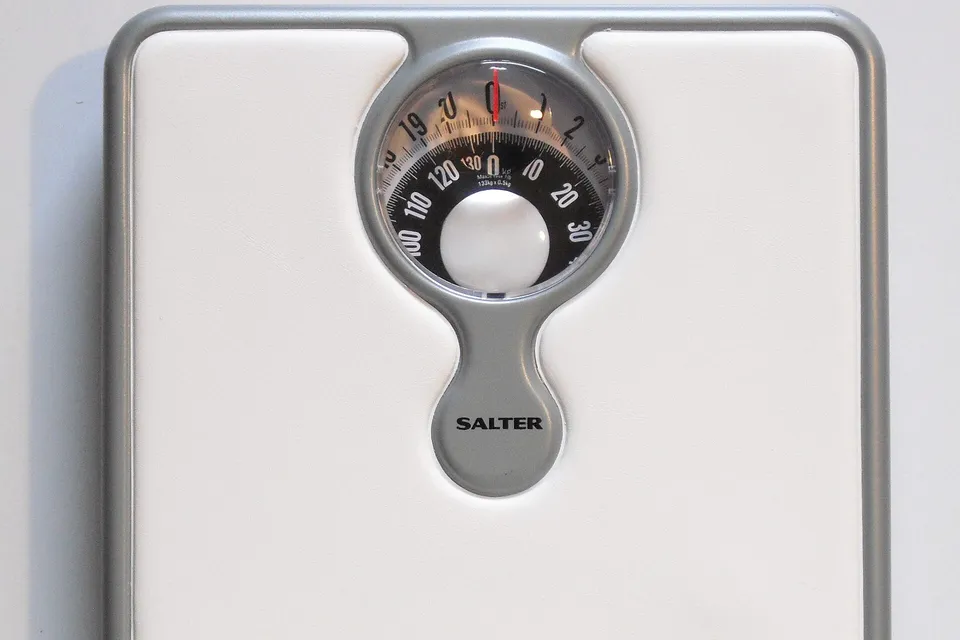
You eat sensibly all week, step on the scale on Monday morning, and it says you are heavier than on Friday. Or the opposite: a dramatic drop after two days of eating less, which vanishes as soon as you eat normally again. Both experiences are normal, and neither says much about body fat. A bathroom scale weighs everything you carry at that moment, and a good part of that load changes from hour to hour. This guide explains what moves the number and how to weigh yourself so that it becomes useful rather than discouraging.
What the scale is really weighing
Body weight is the sum of many parts: bone, muscle and other organs, fat, and a large amount of water, plus whatever is passing through your digestive system. Fat changes slowly. Building or losing a meaningful amount takes weeks of eating more or less energy than you use. Water and gut contents, by contrast, can change by a noticeable amount between one morning and the next. That is why a single weigh-in is a poor guide to whether your body fat has gone up or down.
A useful reference point is simple physics: a litre of water weighs one kilogram. A 500 ml bottle of water drunk just before stepping on the scale adds half a kilo to the reading, and it will be gone again within hours. The same logic applies to a meal: food and drink have weight before the body has done anything with them.
The main reasons for day-to-day changes
Salt and water balance
The body keeps the concentration of sodium in its fluids within narrow limits. After a salty meal, such as a takeaway, crisps, cured meats or a restaurant dinner, it holds on to extra water to dilute the extra sodium, and releases it over the next day or two as the kidneys excrete the salt. The result is a temporary rise on the scale that has nothing to do with fat. If your weight jumps the day after a meal out, salt is a likely reason. Our page on free sugars and salt sets out the daily limit and where most salt in the diet comes from.
Carbohydrate stores
Muscles and the liver store carbohydrate as glycogen, and glycogen is stored together with water: a classic paper by Kreitzman and colleagues in the American Journal of Clinical Nutrition (1992) describes roughly three to four grams of water bound with each gram of glycogen. When you sharply cut carbohydrates or eat very little for a few days, the body draws on these stores and releases the water with them. That is why the first days of a strict diet often show a rapid loss that is mostly water, and why it comes back quickly when normal eating resumes. The same authors called it an illusion of easy weight loss.
What is in your gut
Food takes time to pass through the digestive system. The weight of a large meal, especially one rich in fibre, is still partly with you the following morning, and constipation can add to it for several days. This is not a reason to eat less fibre: most adults would benefit from eating more of it, not less. It is simply a reason not to read too much into the morning after a big dinner.
Hormones and the menstrual cycle
Many women notice that they feel bloated and weigh a little more in the days before a period, then lose it again afterwards. The NHS lists bloating among the most common symptoms of premenstrual syndrome. Comparing the same point in successive cycles gives a fairer picture than comparing one week with the next.
Exercise, heat and sweat
A long walk or a workout on a hot day can bring the scale down through fluid lost as sweat, which returns as soon as you drink. Starting a new strength-training programme can have the opposite effect for a while: muscles that are worked hard hold extra fluid as they repair.
Weekends
Weight also follows a weekly rhythm. In a study published in Obesity Facts in 2014, Orsama and colleagues analysed daily weigh-ins from 80 adults in Finland and the United States and found that weight tended to rise over the weekend and fall again during the working week. People who were losing weight over the longer term showed this pattern too; what distinguished them was a stronger downward correction on weekdays. In other words, a heavier Monday is normal. What matters is where you are a week later.
How to weigh yourself consistently
You cannot remove these fluctuations, but you can stop adding new ones through the way you weigh yourself. The aim is to keep every condition the same so that only real change is left.
- Use the same scale every time, and do not compare readings from your bathroom scale with the one at the gym or at the surgery. Different scales can disagree by a noticeable margin while each being consistent with itself.
- Put it on a hard, level floor and leave it in the same spot. Carpets and uneven tiles can change the reading, and manufacturers' instructions usually say so.
- Weigh first thing in the morning, after using the toilet and before eating or drinking.
- Wear the same thing, or nothing. Clothes and shoes can weigh more than you think.
- Stand still, centred, with your weight evenly on both feet, and read the number once.
- Write it down, with the date, in a notebook or an app, so that you can see the trend rather than remember the last number.
How often? There is no single official rule. A systematic review by Zheng and colleagues, published in Obesity in 2015, found that regular self-weighing was generally associated with better weight loss and less weight regain in the studies it covered. Some people find a daily reading helpful because the ups and downs average out; others find it stressful and prefer once a week, on the same day. Either works if you look at the trend. If weighing yourself makes you anxious, leads you to skip meals or takes up a lot of your thoughts, stop and talk to your GP: the number is a tool, not a verdict.
Reading the trend
A single reading is noisy. A trend is informative. Two simple methods:
- Weekly average. If you weigh daily, add up the week's readings and divide by the number of days. Compare one week's average with the next. Many apps draw this line for you.
- Same day, same conditions. If you weigh weekly, keep the day fixed and avoid the morning after an unusual meal or a long flight.
Give any change several weeks before drawing conclusions. A real change in body fat shows up as a steady drift in the averages; water shows up as zigzags around it. The scale also misses part of the picture. Our guide to the waist-to-height ratio explains how to measure your waist, which reflects fat around the middle more directly than weight alone, and what the 0.5 threshold means. For the bigger question of what weight is right for you, see what is a healthy weight, or check your body mass index with the NHS calculator listed below.
When a change is worth checking
Ordinary fluctuations come and go within days. Some changes deserve attention from a doctor, not more weighing:
- losing weight without trying, especially if you also feel unwell or tired;
- gaining weight quickly together with swollen ankles or legs, or breathlessness, which can be a sign of fluid build-up that needs assessment;
- a steady change over several months that you cannot explain by changes in what you eat or how active you are.
Drinking enough is part of the same picture: being short of fluid can lower the reading for a day and leave you feeling worse. Our article on how much water to drink gives the official figures.
This page is general information from public health sources and published research, not personal medical advice. If you have a heart, kidney or liver condition, are pregnant, or have been asked to monitor your weight by a health professional, follow their instructions on when and how to weigh yourself.
Sources
- NHS, "PMS (premenstrual syndrome)" (common symptoms, including bloating), consulted November 2026.
- NHS, "BMI calculator".
- Kreitzman S.N., Coxon A.Y., Szaz K.F., "Glycogen storage: illusions of easy weight loss, excessive weight regain, and distortions in estimates of body composition", American Journal of Clinical Nutrition, 1992;56(1 Suppl):292S–293S.
- Orsama A.-L. et al., "Weight rhythms: weight increases during weekends and decreases during weekdays", Obesity Facts, 2014;7(1):36–47.
- Zheng Y. et al., "Self-weighing in weight management: a systematic literature review", Obesity, 2015;23(2):256–265.
 Healthy weight & BMI
What is a healthy weight?
Why health services use BMI to describe a healthy weight, what it misses, which other measures help and what affects weight beyond food and exercise.
 Healthy weight & BMI
Waist-to-height ratio
Keep your waist to less than half your height: how to measure, how to calculate the ratio and what the NICE bands mean.
 Nutrition basics
How much water to drink
Six to eight glasses, two litres or 3.7 litres? What the official figures mean, what counts, and the drinks worth limiting.